Posts

Showing posts with the label tradition

Fare thee well, Boukary
Image
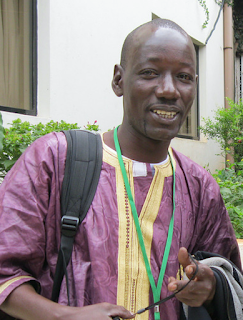
Photo courtesy of Suzanne Lehn Boukary Konaté , 1977 (?) - September 2017 He left us much too soon. Around early 2009, as I was still new on Twitter, I looked for Africa-centric communities and found  Global Voices , and then Claire Ulrich , Anna Gueye , and finally Boukary Konaté  from Bamako, Mali. We became quite friendly - albeit online - and I admired his desire to further his own education as well as promote and safeguard Malian culture, and bring the internet to rural areas. A group of his online friends, led by First World Music 's Akenataa Hammagaadji, in New York, sent him a solar backpack for that purpose. Boukary was a teacher in a Bamako high school. He wrote one of the rare blogs in Bambara, in fact one of the rare blogs in any African language in general: Fasokan . The blog won a Bobs (Best of the Blogs) award in 2012. In 2014, he created a blog and Facebook page called " Quand le Village se réveille " (When the village awakes), that showcased t...

West Cameroon - festive traditional dress

Image
Women dancing in celebration, wearing matching "kabas" The neighborhood chief speaking to the community In December, I was invited to a weekend of festivities in Bamendjou, West Cameroon. The occasion was the honoring of my friend, Jeanne Ntopa, to the title of Mafeu. This title appears to have been the title for the Queen Mother, but as I understood it, can now be given to women who have done much good to their community and thus are elevated to Queen Mother status. Among the Bamileke from the region called the Grasslands by the German colonialists, there are many (related) languages. Thus the language spoken in Bamendjou is only barely understood by our Mafeu's own spouse, who is from the Dschang area. I understood nothing at all on the first day; however, I could sense the joy and pride during the Mafeu's neighborhood community celebration. On the second day, the Bamendjou traditional chief, in this title since over 60 years, spoke in French as he ackno...

"From the Hut to the Modern Home" book campaign

Image
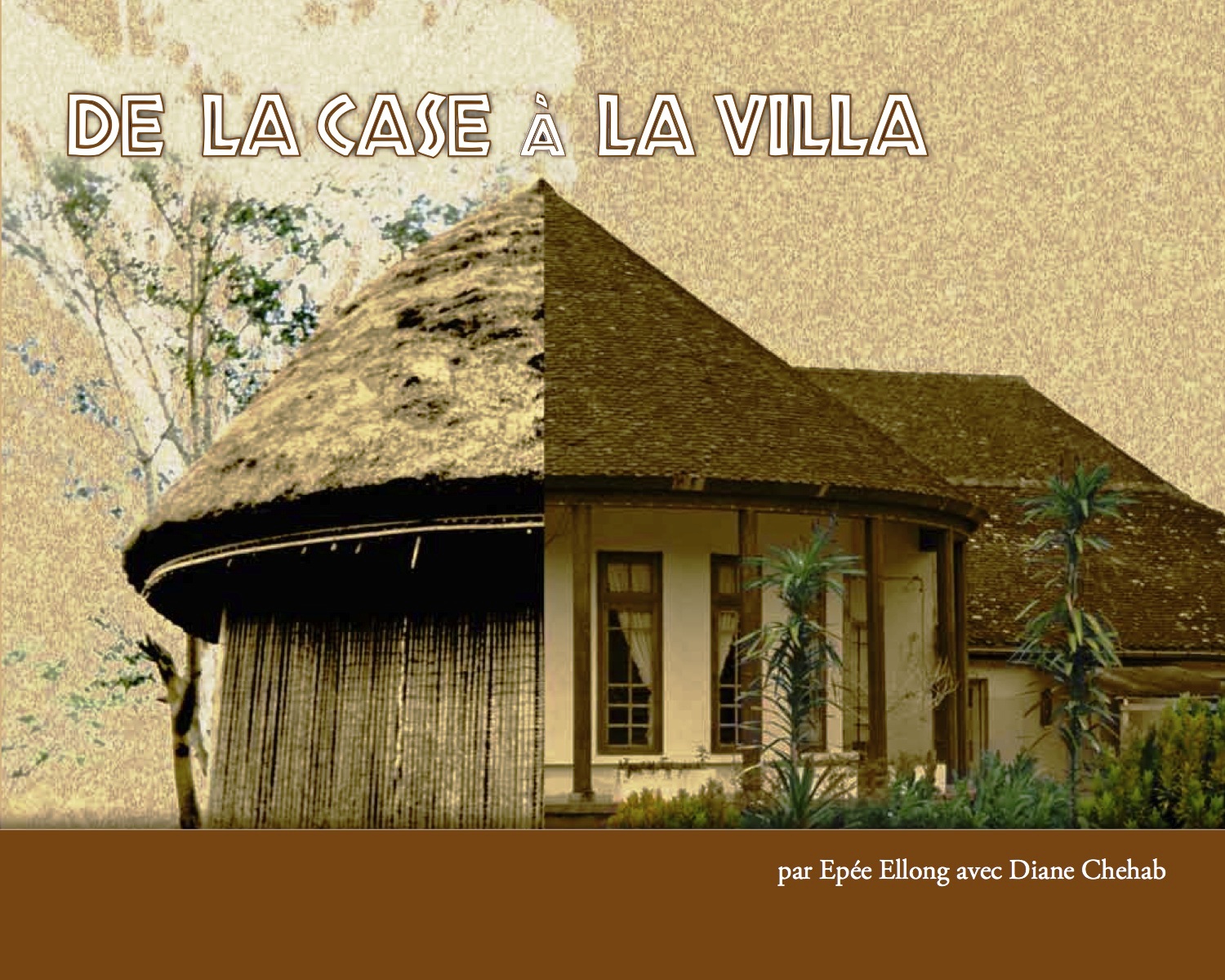
Update: The following campaign is now over--thank you to our contributors!   “From the Hut to the Modern Home” is a discussion and analysis of the evolution of housing in  A frican architectur e  from traditional dwellings to the modern home . Indiegogo campaign:   http://igg.me/at/delacasealavilla  This book attempts to answer the African architect’s constant professional dilemma of adherence to the concept of “modern African” architecture, while recognizing that Africans no longer wish to live in traditional-style dwellings as their life style and housing needs continue to evolve. The direction taken by Epée Ellong, and Diane Chehab, is to follow traditional African architecture through time to today’s African architecture, to show the contradictions in the social and technical transformations through various historical phases. To accomplish this work, Epée Ellong delves into his own experience and knowledge of Central Africa . He traveled exte...

Traditional and Contemporary Dress from Africa

Image
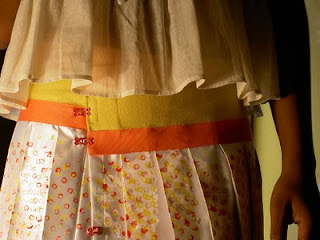
In May 2010, there was a photo in the media of South African President Zuma wearing leopard skin at a wedding. The photo prompted a discussion on whether Africans should show the rest of the world themselves in traditional dress, or wearing European clothes in order to "blend in" with the rest of the world, as many Westerners have an unfavorable idea of African tradition. In my view, this would be an error. The problems in Africa do not have anything to do with their traditional ways of dressing. As a matter of fact, some of the leaders one only sees wearing suits and ties are in fact the worst and the  most corrupt. Photo courtesy Sakina M'sa To be frank, some ways of dressing may not be the most practical for going to the office; and I have nothing against anyone wearing the latest designs, especially as nowadays there are also many designers of African descent, albeit more in the realm of women's clothing than men's attire. To cite a few: Alphadi , Saki...

Our Daily Bread (or Plantain)

Image
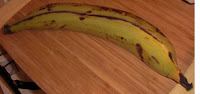
In earlier blog posts , I wrote about the variety of Cameroonian food. In this post, I'll delve into the daily life of the household in Douala, and the efforts put into getting a meal on the table. Douala is situated 4 degrees north of the equator, near the coast, at the estuary of the Wouri River. The climate is tropical. Humidity is extremely high and temperatures are most often in the 90-degree Fahrenheit range (30 Celsius). Plantain There is a rainy season that lasts about two months every year, when it gets slightly cooler (in 12 years I managed once to wear stockings, not really because I needed to), but humidity goes through the roof, and it can pour nonstop for several days in a row. In the first months, I used to go to the food market several times a week to buy groceries. Deido market was the closest (Deido is the Douala neighborhood where we lived, and my husband's ancestral home). It was not a very large market, but you could get everything you needed fo...

Don’t call out my name.

Image
The dead are not dead. In many African cultures, the dead are not dead—they have just gone somewhere else, not too far, but invisible to us, the “living.” In Duala culture, before colonization, and still the case in many families, every person had a given name that was followed by the father’s name. For example, Ebélé Billé is Ebélé, son of Billé. However, nobody ever calls the person out loud by their name. As most probably a forebear held that name previously, to call that name out would unnecessarily disturb the deceased forebear. Instead, he’ll be called by a series of nicknames: “ Tété ” (ancestor), or the sound of the name on the horizontal wooden log (“ Elimbi ”) used as a local telegraph. For example, my husband’s telegraphic name was Koloto. Other Elimbi names: Dimbion, Toki, Tékélé...