Posts

Showing posts with the label fashion

Vilcek Prize: "Jacques Agbobly’s Journey from Lomé to American Fashion’s Future"

  Jacques Agbobly’s Journey from Lomé to American Fashion’s Future

Fashion: Made in Africa - Zuri's "One Dress"

Image
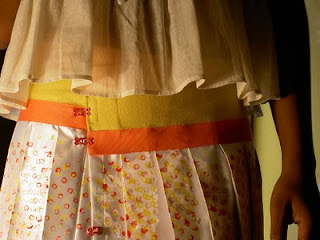
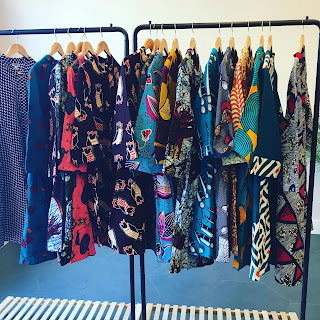
Zuri dresses in San Francisco Thanks to the internet, and the global economy, Made in Africa fashion is becoming more mainstream than ever before. Two partners had a hit on their hands when they designed and produced one simple dress, in a variety of African print fabrics:  Zuri. The company has been featured in the New York Times and the San Francisco Chronicle , among other publications. Zuri has a brick and mortar shop in New York City, but San Francisco residents got a first taste at the pop up shop, in October 2017. The dresses' reputation caught the attention of Eden Stein, owner of Secession Art and Design . Usually only local designers are featured, but her customers were clamoring for the dresses. A Zuri dress in the Secession store window In her words:  " I was at a gala for Artspan , mingling with 800 emerging and established artists, when I saw artist Soad A. Kader in her Zuri dress. I beelined to give her a compliment. She told me about a ...

A Douala architect: Caroline Barla

Image
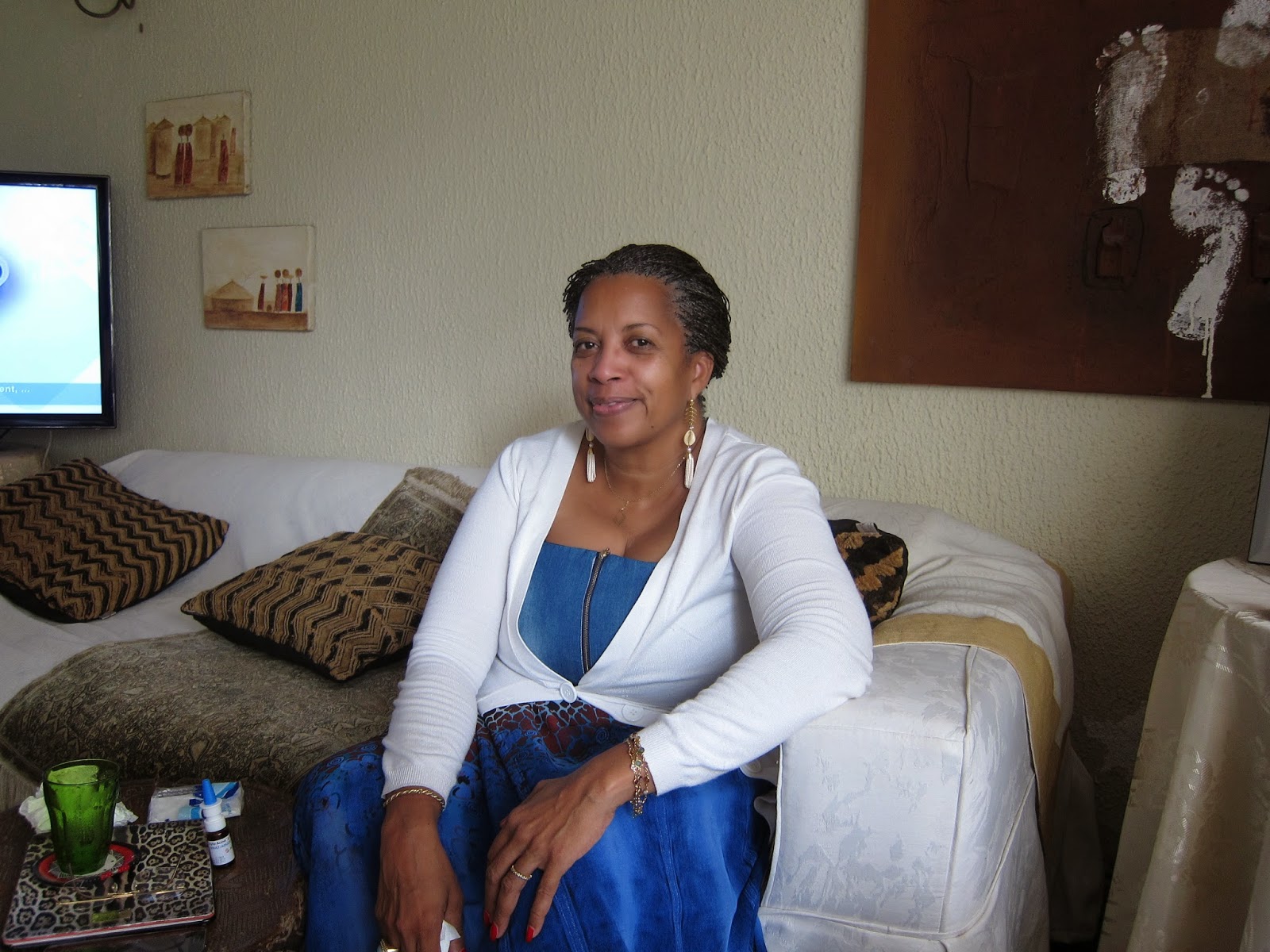
Caroline Barla When recently in Douala, where my spouse, Epee Ellong, has returned, I got together with a good friend I hadn't seen in a very, very long time. Her name is Caroline Barla, and she is (I think) the first female Cameroonian architect (her father, Nsangue Akwa, was the first in the registry of Cameroon architects, ONAC). Caroline has been busy in all those years in the design field, not only in architecture. We didn't have time to go into much detail, so I will mainly show you photos of her home, which is a showcase for contemporary African style. The Barla living room--a mix of contemporary  and traditional African style Above: Dining Room chair; below: Traditional Bamiléké funeral dancer's headdress Caroline's work area   Caroline also managed a store of original designs for a few years, Caramelle. One of her inventions was to create versions of the "kaba" (the Duala women's traditional dress since about 100 year...

Ali Baba's Cave: Calabar Imports in Brooklyn

Image
Atim in the Front Street store Calabar was an international sea port as far back as the 16th century. Calabar Imports is a fitting name for Atim Annette Oton's Brooklyn-based stores. I visited her in the seasonal Dumbo store, at The Shops at 145 Front Street. Atim is one of the first African-born architects we met in New York. At the time she was teaching, and publishing a design magazine called Blacklines; she had interviewed my spouse, Epée Ellong , for an article about his architectural projects in Cameroon. It's now my turn to write about her! The store is in Dumbo, in the shadow  of the Manhattan Bridge The store and business is owned by  Atim Annette Oton and her mother,  Heloise Annette Oton.  The main store is located  in the Crown Heights neighborhood of Brooklyn, NY.  Calabar Imports carries a dizzying array of unique handcrafted items: affordable fashion clothing, fashion accessories, jewelry, home decor and gifts. T...

Toubab Paris: African-themed accessories and offbeat objects

Image
The word "toubab" means "white person" in Wolof, a language spoken in Senegal, and also in Bambara (Mali). Why use this term for the name of this accessories company? Because Maud Villaret, the head designer, is a toubab herself; Toubab Paris brings two worlds together, and symbolozes the back and forth between the continents. I was attracted by her whimsical designs, and curious to find out how she came about creating African themed accessories... Maud in NYC Born and raised in France,  Maud attended a well-known design school, the Ecole Duperré , majoring in textile arts. During her last year in school, she traveled to Mali for an Indigo workshop. Indigo dye is a natural dye, from the plant   Indigofera tinctoria  - it is written that the dye was first widely used in India (ancient Phoenicia used a similar color that came from a rock snail, the Murex). Nowadays, Indigo is still widely used in Western Africa, in countries such as Guinea, Senegal and Mali. ...

Le Pagne and African-made fashion

Image
Display at R.W. King, Douala One of the first stops I made while in Douala was to buy pagne , African fabric, at R.W. King. Since a couple of years, women's clothing made with pagne is popping up in Saks Fifth Avenue and other upscale retailers' ads, at corresponding prices, in the many hundreds of dollars: Suno and Edun ; in France, Toubab Paris .* In Edun's case, it certainly helps that a celebrity ( Bono ) and his spouse, Ali Hewson--are behind it. These trademarks have one thing in common: non-African founders, which is sad, as the same thing happens in all design fields, and often not only for Africans, but all "developing" countries: if the designer is African (or Indian, or even Chinese), she/he is ignored by major Western media or trade representatives (retailers, galleries). On the other hand, when finally Africa joins the rest of the economically wealthy world, and I am convinced the day will come, this will become b...
Traditional and Contemporary Dress from Africa

Image
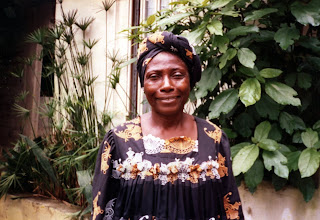
In May 2010, there was a photo in the media of South African President Zuma wearing leopard skin at a wedding. The photo prompted a discussion on whether Africans should show the rest of the world themselves in traditional dress, or wearing European clothes in order to "blend in" with the rest of the world, as many Westerners have an unfavorable idea of African tradition. In my view, this would be an error. The problems in Africa do not have anything to do with their traditional ways of dressing. As a matter of fact, some of the leaders one only sees wearing suits and ties are in fact the worst and the  most corrupt. Photo courtesy Sakina M'sa To be frank, some ways of dressing may not be the most practical for going to the office; and I have nothing against anyone wearing the latest designs, especially as nowadays there are also many designers of African descent, albeit more in the realm of women's clothing than men's attire. To cite a few: Alphadi , Saki...

Cameroon Street Fashion: Ladies First

Image
Women on the streets of the towns I visited - and I visited quite a few - wear a mix of styles, and the same woman may wear the latest Parisian fashion to the office one day, and a traditional outfit the next day. A woman may not have the means to have a fancy house, but often you couldn't guess that by looking at her. If there is any money to spend, after basics such as shelter and food, she'll try to look her best. Seamstresses are usually the means to look good. It is much cheaper to have an outfit custom-made, than to purchase at a boutique, even a non-luxury shop. However, more and more used clothing is arriving from the United States and elsewhere, some of it in excellent condition, and many people rely on that option; it is often very cheap. That is how you'll find someone in a remote village wearing a "University of Maryland" tee-shirt (possibly donated to a charity somewhere in Oklahoma). Traditional dress differs depending on the lady's ethnic ba...