Posts

A few photos from the book From the Hut to the Modern Home

Image
These are a few of the images that have been chosen for the book " De La Case A La Villa "  (From the Hut to the Modern Home).  (Description of the book in English available at: http://www.awayfromafrica.com/2013/05/from-hut-to-modern-home-book-campaign.html ) "Modern traditional" in West Cameroon/"Nostalgic Architecture" chapter.  Photo courtesy of Christine Jumaucourt North Cameroon Foulbé contemporary huts Square hut in poto-poto (West Cameroon) Bamiléké funerary masks
"From the Hut to the Modern Home" book campaign

Image
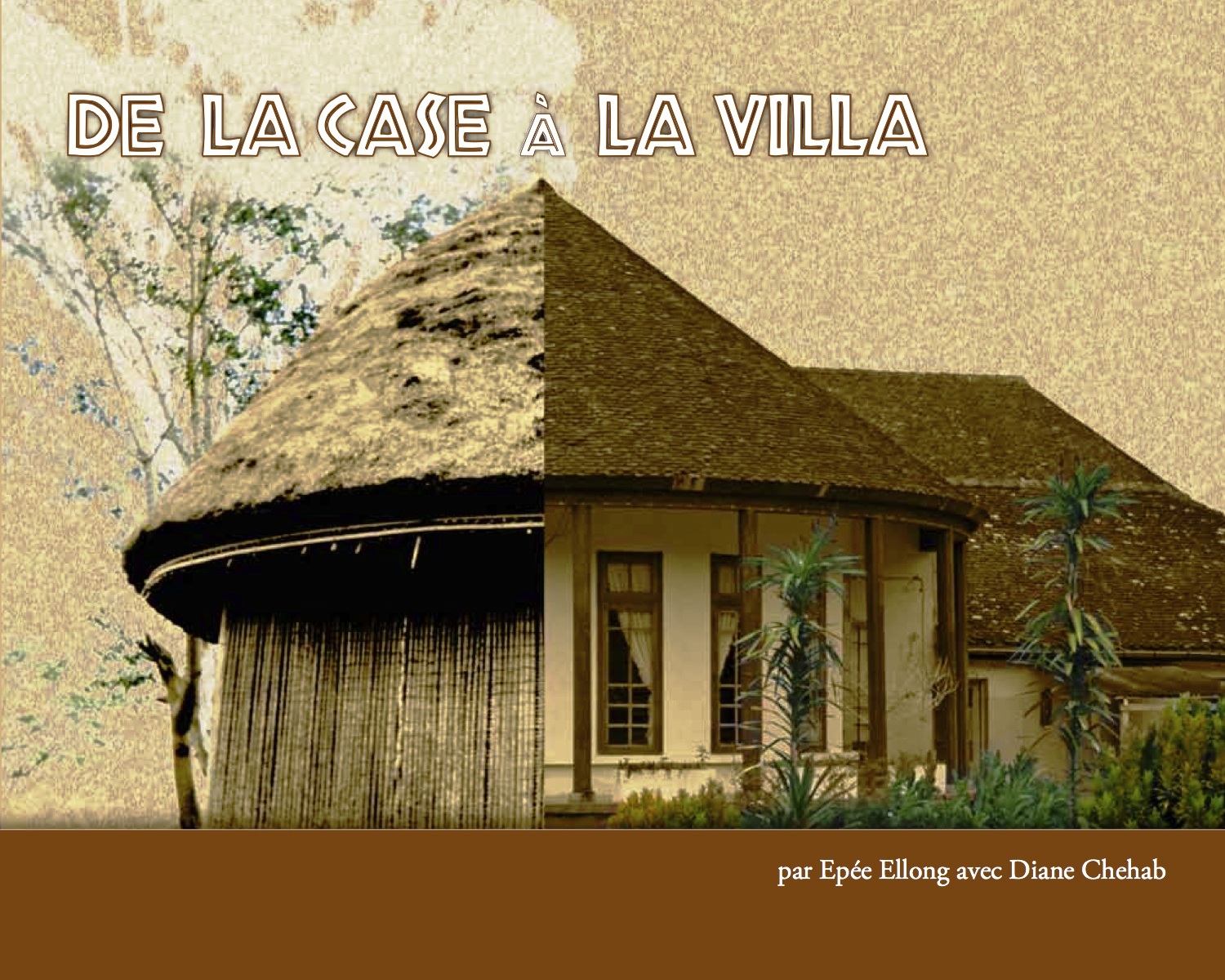
Update: The following campaign is now over--thank you to our contributors!   “From the Hut to the Modern Home” is a discussion and analysis of the evolution of housing in  A frican architectur e  from traditional dwellings to the modern home . Indiegogo campaign:   http://igg.me/at/delacasealavilla  This book attempts to answer the African architect’s constant professional dilemma of adherence to the concept of “modern African” architecture, while recognizing that Africans no longer wish to live in traditional-style dwellings as their life style and housing needs continue to evolve. The direction taken by Epée Ellong, and Diane Chehab, is to follow traditional African architecture through time to today’s African architecture, to show the contradictions in the social and technical transformations through various historical phases. To accomplish this work, Epée Ellong delves into his own experience and knowledge of Central Africa . He traveled exte...

Barbershops and hairdressers

Image
In Cameroon, as in other Sub-Saharan African countries, barbershops used to have painted signs showing several haircut styles. At some point the museum world started paying attention and suddenly these signs were popping up in museum stores. The last two times I was in Cameroon I realized the signs weren't being used anymore, and in fact had pretty much disappeared. Nowadays there is either just one style shown, or photos are used rather than a painting. It was quite a disappointment! Barbershop in Kekem, West Cameroon In the United States, barbershop signs sightings include a restaurant in Cambrisge, Massachusetts, Green Street, where they are used as decor. Barbershop signs at Green Street Restaurant (photos: Sami Ellong) Other links to posts on this subject: http://www.anotherafrica.net/interviews/township-barbershops-signs-of-south-africa

Dr. Erik Nordman - Sustainability specialist in Kenya

Image
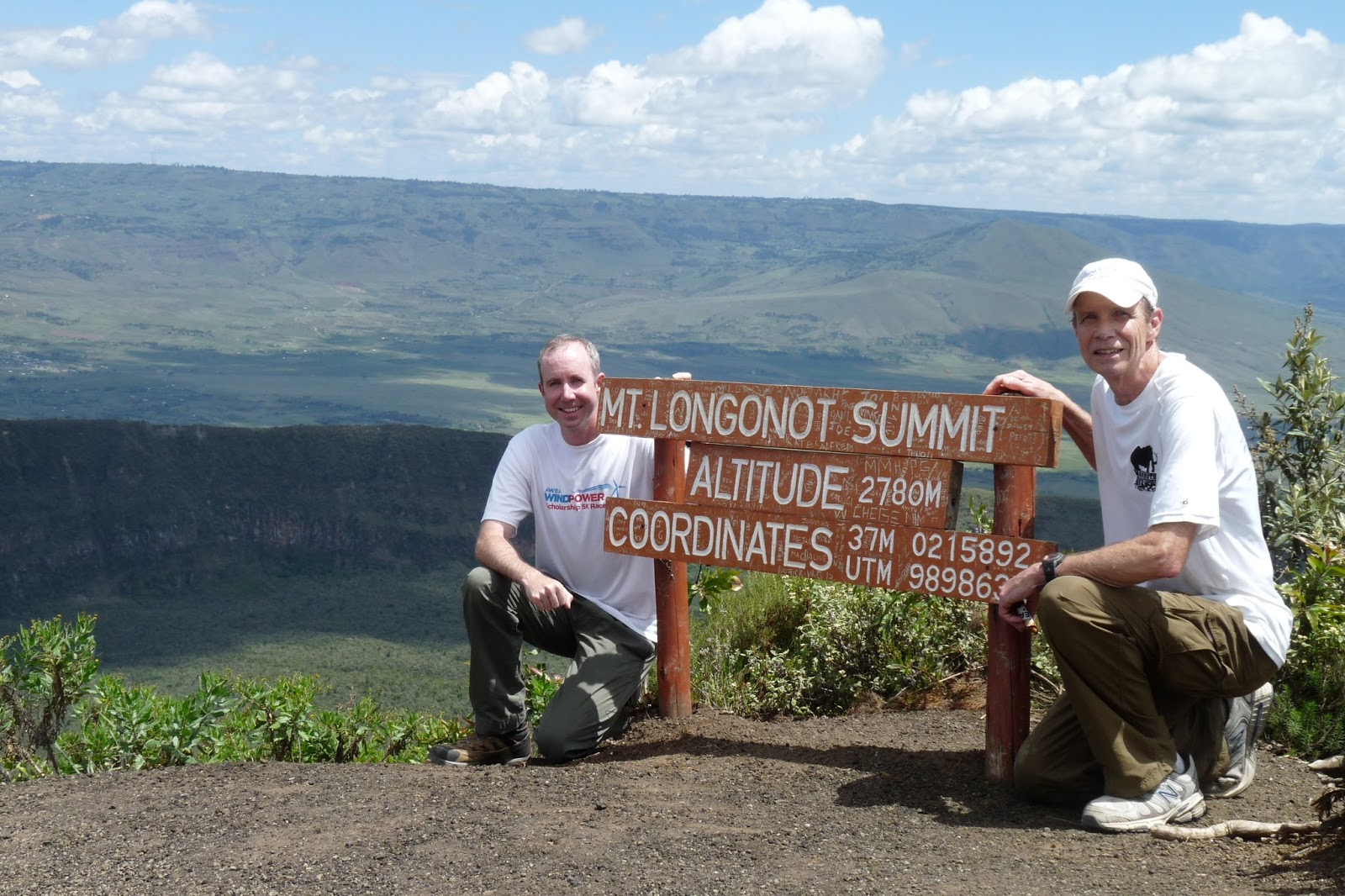
Sometimes it really seems like there are just a few degrees of separation between all of us humans. Recently I attended a celebration with colleagues I hadn't had a chance to chat with yet, and found out that one colleague's son, Erik Nordman, was currently residing in Kenya (his dad had just gone to visit him and his family). Of course, my curiosity was piqued, I went to read his blog at Nordman Sustainability , and emailed him to find out more. Below is the interview, conducted by email. Son and father at Mount Longonot (a dormant volcano in the Rift Valley) What is your background? I grew up on Long Island, where my parents, brother and sister still live. I moved upstate for college and earned a BS in Biology from SUNY Geneseo, and an MS (forest ecology) and PhD (natural resource economics and policy) from the SUNY College of Environmental Science and Forestry in Syracuse. Since 2006 I have been a professor of Natural Resources Management at Grand Valley State Univer...

Interview with William Siegmann in January 2010

Image
(This post was originally written for the Sosauce.com site, not in existence anymore. William Siegmann, sadly, passed away in November 2011.) William Siegmann (photo by Adam Husted, Brooklyn Museum) I first heard about William Siegmann through Sally Williams, Public Information Officer at Brooklyn Museum, NY, where he worked as a curator. He spent many years in Liberia, starting in 1965, and it sounded like he’d have a fascinating story to tell. I was not disappointed when I was finally able to meet him in person. He first came to Liberia in 1965, as a member of the Peace Corps. It was a heady time, as many African nations were celebrating their independence from European colonization. He taught at a private college, Cuttington University. Most of the students were Liberian but there were also a few students from Nigeria, Cameroon, Sierra Leone, and later also Kenya, Sudan, and Tanzania. During this time, Siegmann, a history major, developed an interest in African ar...

El Anatsui: 2013 Brooklyn Museum Retrospective

Image
"Gli" (Wall), 2010, at the beginning of the exhibition area, Brooklyn Museum What a life trajectory. El Anatsui's work is now featured in a retrospective at one of the United States' premier museums, the Brooklyn Museum :  Gravity and Grace: Monumental Works by El Anatsui , curated by Kevin Dumouchelle. El Anatsui has been shown at New York City's contemporary African art galleries since over 20 years, such as Skoto Gallery and the  Contemporary African Art  gallery. The first pieces I had seen, in the 1990s, and admired, were made of wood, and I still have a Newark Museum postcard I held on to since 2007. Several years ago, both Skoto Gallery and the Contemporary African Art Gallery staged a double exhibit of El Anatsui's new metal work, which is the art that finally made him famous worldwide, at the age of sixty! "Amewo" (People) - 1998, modified 2010 The art  was so wonderful to behold that we all wanted a piece, even though none of ...

Road trips in Cameroon - Douala, West Cameroon & Yaounde

Image
Aerial view of Douala Douala , Cameroon, has a long way to go before getting into a NY Times or AFAR must-see destination list. However, it is the gateway to the scenic Western portion of Cameroon. Douala is the commercial hub and the largest city of Cameroon (about 3 million inhabitants), albeit not the political capital, which is Yaounde. Unfortunately urban development went haywire, and it has become a very disheveled-looking city, with the exception of the administrative and diplomatic neighborhoods, formerly where the colonizers lived. The climate doesn't help, as it is very hot and humid. However, less than 10 kilometers out of the city, the scenery starts changing. Home on the road between Douala and West Cameroon On the road to the west, after the Wouri River bridge, post-colonial homes dot the roadside. By the time one reaches Melong, most people’s means of transportation is their feet. Many of these rural village dwellers work in small-scale agriculture. ...